Airbnb vs Hotel for Long Stay: Which Actually Costs Less?
If you are booking a trip that runs two weeks, a month, or longer, the math changes fast. A hotel that looks reasonable at $140 a night turns into a $4,200 monthly bill before taxes and fees, while a furnished apartment booked through Airbnb might drop that figure by a third or more. The airbnb vs hotel for long stay question is not just about price, though. It is about kitchens, laundry, space, and what happens when a host cancels on you ten days before check-in.
Neither option wins every time. Hotels are stronger on consistency, cleanliness, and accountability, and they often come out ahead for stays under a week or for solo business travelers who want housekeeping and a front desk. Airbnb, Vrbo, and extended-stay rentals usually win on cost per square foot and on actually living somewhere instead of camping in a hotel room.
This guide walks through the real numbers, the hidden fees, and the situations where each one beats the other, so you can book a 30-night stay without overpaying or ending up somewhere you regret.
The Cost Breakdown: What a Long Stay Really Costs
The nightly rate is a small part of the story. Both platforms pile on fees that scale differently, and that is where a long stay gets expensive or stays cheap.
How Airbnb prices a long stay
Airbnb hosts almost always offer a monthly discount, which is the single biggest reason Airbnb wins the budget conversation for 28+ night bookings. A listing priced at $120 per night might drop to $70 per night once you hit 30 nights, or the host may show a flat monthly rate outright. That is a discount of 30% to 50% that hotels rarely match on published rates.
On top of the discounted rate, expect:
- A cleaning fee, usually $50 to $200, charged once per stay rather than per night. Over 30 nights, a $150 cleaning fee is $5 a day.
- A service fee of roughly 14% of the subtotal (it has been as high as 17% in some listings).
- Occupancy taxes, which vary by city and county but typically land between 5% and 15%.
Because the cleaning fee is flat, it stings on a two-night stay and barely registers over a month. That is the core reason Airbnb an economics get better the longer you stay, not worse.
How hotels price a long stay
Hotels price per night, and the rate does not automatically get cheaper after day 28. What you get instead is:
- Negotiated extended-stay rates at brands built for this, like Residence Inn, Homewood Suites, Staybridge Suites, and Candlewood Suites. Call or book the “extended stay” or “long-term rate” and the nightly price can fall 15% to 25% below the flexible rate.
- Loyalty points and elite qualifying nights, which have real dollar value if you stay at hotels often. A 30-night stay can earn enough points to cover two or three free nights later.
- No cleaning fee and no service fee, so the price you see is closer to the price you pay, adjusted for nightly tax.
The catch is that hotels rarely discount as aggressively as an Airbnb host with an empty calendar. A $140 room discounted 20% is still $112 a night, or $3,360 a month before tax.
| Factor | Airbnb | Hotel |
|---|---|---|
| Pricing unit | Nightly, with a monthly discount | Nightly, with a negotiated long-stay rate |
| Typical monthly discount | 30% to 50% off the base rate | 15% to 25% off the flexible rate |
| Cleaning fee | $50 to $200 per stay | None (included) |
| Service fee | ~14% of the subtotal | None |
| Points earned | None (unless you chase credit card rewards) | Hotel loyalty points and elite nights |
| Best deal window | 28+ nights | Under 7 nights, or when using points |
If you want a deeper look at the side-by-side numbers for shorter trips, our guide on airbnb vs hotel cost breaks down the same comparison for weekend and one-week stays.
Photo by Louie Alma via Pexels
Space, Kitchen, and Actually Living Somewhere
The second-biggest reason people choose Airbnb for a long stay is space. A typical US hotel room runs 300 to 400 square feet. A one-bedroom Airbnb or extended-stay suite in the same city runs 500 to 800 square feet, adds a living room, and usually gives you a real door between the bedroom and the rest of the unit.
That matters more on day 20 than on day 2. Working from a hotel room means sitting on the bed during calls. Working from an apartment means a desk, a separate room, and some chance of keeping your sleep and your work apart.
The kitchen is the real savings
For a stay of two weeks or more, a kitchen turns into the biggest hidden line item in the whole decision. Eating every meal out of a hotel minibar or the restaurant downstairs costs $40 to $80 a day per person. A basic grocery run and a stove brings that down to $12 to $20 a day.
- 30 nights of restaurant meals for one person: roughly $1,200 to $2,400.
- 30 nights of grocery shopping for one person: roughly $360 to $600.
- Difference in your pocket: anywhere from $600 to $1,800 per month, which often equals or exceeds the rent itself.
Hotels that do have kitchens, namely the extended-stay brands like Candlewood Suites and Residence Inn, close part of this gap. But a standard hotel room with no kitchen forces the restaurant budget on you whether you want it or not.
Amenities: Housekeeping and Gym vs Laundry and Parking
This is where hotels make up lost ground. The daily housekeeping, the gym, the pool, and the 24-hour front desk are not luxuries on a long stay; they are part of why you pay a premium.
What hotels give you that Airbnb usually does not
- Housekeeping on a schedule, so you are not scrubbing your own toilet in week three.
- On-site gym and pool, which saves a separate gym membership.
- Front desk and maintenance staff who can fix a broken air conditioner the same day.
- Breakfast, which is free at many mid-range and extended-stay brands, and quietly worth $10 to $20 a day.
- Stable, reliable Wi-Fi with a phone number to call when it drops.
What Airbnb gives you that hotels usually do not
- In-unit laundry, worth its weight in gold on a 30-night stay. Coin laundry in a hotel or a launderette run is a recurring chore and a recurring cost.
- Free or included parking, where hotels in city centers often charge $30 to $60 a night. That alone can be $900 to $1,800 a month.
- A full kitchen, covered above.
- A residential feel, which is intangible but real when you are trying to keep a normal sleep and work rhythm.
If the property itself is the deciding factor on a shorter or resort-style trip, see our comparison of hotel vs resort which is better for how pools, dining, and daily activities tip that decision.
The Risk Question: Cancellations, Consistency, and Trust
The single biggest argument for hotels on a long stay is predictability. A Marriott or Hilton room is, for better or worse, the same almost everywhere, and the chain wants your return business.
Airbnb is a marketplace of individual hosts, and that shows in the risks:
- Host cancellations. A host can cancel before check-in, and the Airbnb guarantee does not always find you a comparable place at the same price on short notice. For a monthly booking, a cancellation three days out can wreck a whole work assignment.
- Listing accuracy. Photos can be years old, and “cozy” can mean “small and worn.” Hotels get inspected and reflagged; Airbnbs mostly do not, beyond guest reviews.
- No front desk. If the lockbox code does not work at 11 p.m., you are messaging a host through an app rather than walking to a desk.
Hotels also carry legal duties that random hosts do not. You can usually walk out the same day if a room is unacceptable; Airbnb dispute resolution after check-in is slower and more subjective.
None of this makes Airbnb risky for long stays. It means you should favor Superhosts with long review histories, read the cancellation policy, and remember the discount is only real if the stay happens.
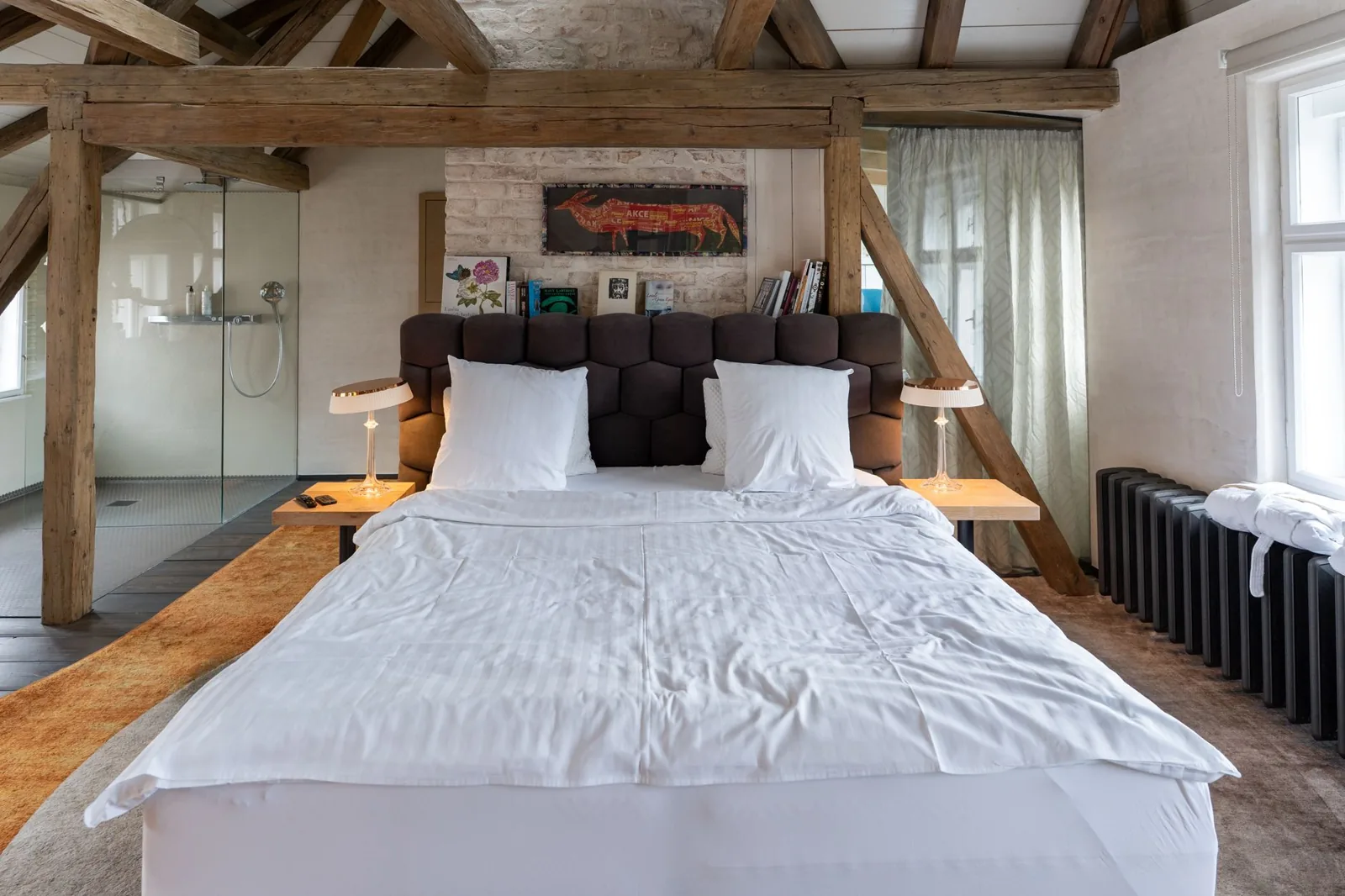
Photo by Pexels via Pexels
Loyalty, Points, and the Frequent Traveler Math
If you travel often for work, hotels have a quiet advantage that Airbnb cannot match: status. Stays at Marriott, Hilton, Hyatt, and IHG earn points and elite nights, and 30 nights a year is enough to reach meaningful elite tiers at several of them.
- Marriott Bonvoy: 30 nights earns Gold status by 2024 program terms, with late checkout and points bonuses.
- Hilton Honors: Silver at 10 nights, Gold at 40 nights, both of which matter for upgrades and breakfast.
- World of Hyatt: Discoverist at 10 nights, which unlocks small perks and faster point earning.
Those points are not free money, but they are real. A traveler who spends 60 nights a year in hotels converts that into several free nights, upgrades, and suite access, which changes the long-run cost math.
Airbnb offers no loyalty program of its own, though a few travel credit cards do let you earn extra points on Airbnb charges. For someone who stays in paid lodging once or twice a year, this matters little. For a road warrior, it can be the whole decision, and it is worth reading is Airbnb cheaper than hotels to see how the points value shifts the totals for frequent travelers.
For a trusted outside view on the fee math, NerdWallet keeps an updated breakdown of when vacation rentals beat hotels and vice versa (NerdWallet’s vacation rental vs hotel guide).
Which Is Right for Your Specific Long Stay?
The answer depends on three things: the length, the location, and whether it is for work or leisure.
Choose Airbnb when
- The stay is 28 nights or more and the monthly discount is visible.
- You need a kitchen and laundry, both of which the listing has.
- You are in a residential or suburban area where hotels are scarce or overpriced.
- You are traveling as a family or group and would otherwise book two hotel rooms.
- You need parking and the hotel charges for it.
Choose a hotel when
- The stay is under two weeks and the cleaning fee eats the savings.
- You value housekeeping, a gym, and a front desk over a kitchen.
- You are booking on points or chasing elite status.
- You are in a city center where hotels are dense and Airbnb supply is thin and expensive.
- You need flexibility, since hotel rates are often refundable and Airbnb long-stay policies often are not.
The sweet spot is the one nobody talks about: extended-stay hotel brands. Residence Inn, Homewood Suites, Staybridge Suites, and Candlewood Suites exist specifically to combine a kitchen and laundry with hotel predictability, often with a weekly or monthly rate that undercuts both a standard hotel and many Airbnbs. If you are comparing options anyway, put one of them on the same spreadsheet, and see our breakdown of hotel vs motel vs inn if the property type labels are throwing you off.
Frequently Asked Questions
Is Airbnb cheaper than a hotel for a month-long stay?
Usually, yes. A host’s monthly discount frequently cuts the nightly rate by 30% to 50%, and the flat cleaning fee spreads thin over 30 nights. Hotels discount less aggressively, so a comparable hotel room often runs 20% to 40% more for the same month, before you factor in the kitchen savings on Airbnb.
Do hotels offer discounts for long stays?
Yes, but you usually have to ask. Extended-stay brands like Residence Inn and Candlewood Suites publish long-term rates, and even full-service hotels will often negotiate 15% to 25% off the flexible rate for a 30+ night booking if you call the hotel directly rather than booking online.
What is the biggest hidden cost when booking a long stay?
For Airbnb, it is the service fee and host cancellation risk. For hotels, it is parking and dining out every day, which together can add $1,000 or more per month on top of the room rate. In-unit parking and a kitchen are the two amenities with the largest financial impact on a long stay.
Is Airbnb safe for a month-long booking?
Generally yes, if you book a Superhost or a listing with a substantial review history and read the cancellation policy before paying. The main risk is a host canceling close to check-in, so keep a refundable hotel backup for critical trips.
Which is better for a digital nomad, Airbnb or a hotel?
Airbnb wins for most digital nomads because of the kitchen, laundry, dedicated workspace, and monthly discount. A hotel is better if you want housekeeping and reliable Wi-Fi support and do not mind paying more per square foot for the convenience.
The Bottom Line
For most stays of 28 nights or more, Airbnb beats a standard hotel on price, space, and the ability to actually live somewhere rather than exist in a room. The monthly discount, the flat cleaning fee, and the kitchen savings stack up to hundreds or thousands of dollars over a month.
Hotels earn their premium when you need consistency, housekeeping, and points, or when the trip is short enough that the Airbnb fees cancel the discount. The cleanest middle path is an extended-stay hotel brand, which borrows the best of both and is frequently the option nobody checked.
There is no single right answer to the airbnb vs hotel for long stay question, but the decision is easy once you price it out: total the rent, fees, parking, and food for each option, and book whichever leaves more money and fewer surprises for the month you are actually living there.
For more head-to-head breakdowns, start with boutique hotel vs chain hotel or our rundown of airbnb vs hotel cost.